
Shopify SEO vs. WooCommerce SEO in 2026: Which Platform Ranks Faster for Online Stores?
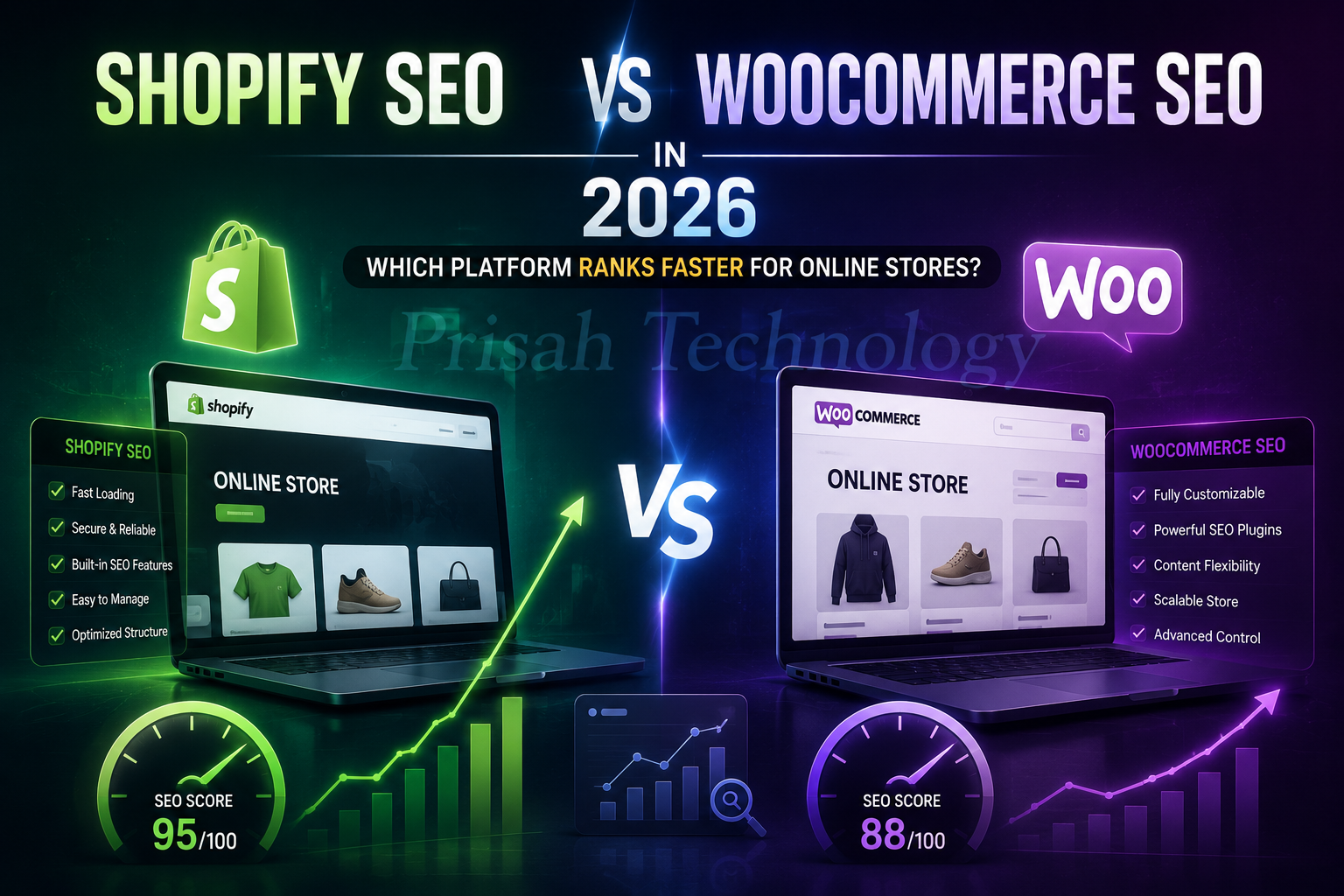
The e-commerce landscape in 2026 has shifted. With Google’s Search Generative Experience (SGE) and AI-driven rankings prioritizing “Helpful Content” and “Technical Precision,” the platform you choose for your online store is no longer just a backend decision—it is a critical SEO strategy.
At Prisah Technologies, we frequently get asked: “Should I build on Shopify for speed, or WooCommerce for control?” In this deep dive, we compare these two giants through the lens of a 2026 SEO Expert to see which one truly helps you scale organic revenue faster.
The Evolution: SEO in 2026 vs. The Past
To understand how SEO works now, we must understand what it is reacting to. In 2026, search is defined by three major shifts:
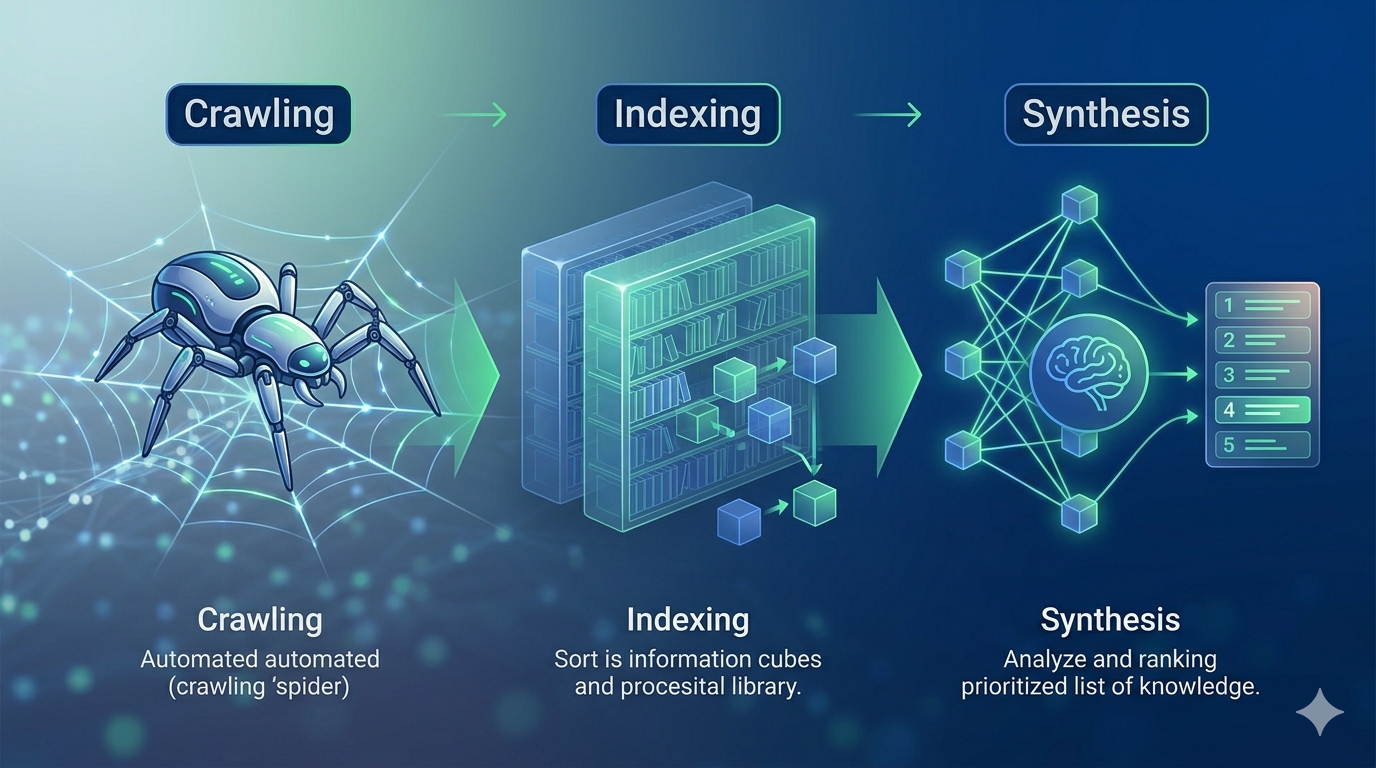
AI-Generated Answers (SGE/AIO): Search engines (like Google and its competitors) no longer just provide links. They synthesize information. A large percentage of queries are answered directly on the search result page by an AI agent (often referred to as Search Generative Experience or AI Overviews).
Multimodal Search: People are not just typing keywords. They are using voice commands via smart contacts or neural interfaces, searching with their cameras (visual search), and looking for short-form video content over text.
Hyper-Personalization: No two search results pages are the same. Search engines understand the user’s location, past behavior, and immediate context to serve uniquely tailored answers.
Therefore, the definition of SEO in 2026 is: The art and science of making your content visible, authoritative, and easily synthesizable by AI agents to satisfy human user intent.
1. The Speed Factor: Core Web Vitals in 2026
Google’s ranking algorithm now places massive weight on Interaction to Next Paint (INP) and Largest Contentful Paint (LCP).
Shopify: Since Shopify is a “hosted” platform, it manages its own global CDN (Content Delivery Network). In 2026, Shopify’s infrastructure is incredibly optimized. Images are served in next-gen formats automatically, and server response times are consistent. For a business owner who isn’t a developer, Shopify usually ranks faster out-of-the-box because it prevents you from making “slow” mistakes.
WooCommerce: As a WooCommerce SEO Expert, I can tell you that this platform is a “double-edged sword.” If you use high-end, dedicated cloud hosting and a clean theme, WooCommerce can actually outpace Shopify. However, if you are on cheap shared hosting with too many plugins, your site will lag, and your rankings will tank.
The Verdict: Shopify wins for stability; WooCommerce wins for “potential” speed in the hands of a developer.
2. Technical SEO Control: The "Under the Hood" Battle
To rank e-commerce products on Page 1, you need to fix things that Google’s bots hate—like duplicate content and “crawl bloat.”
Shopify’s Limitations: Shopify still uses a rigid URL structure (e.g.,
/products/and/collections/). While Google has become better at understanding this, it still limits your ability to create a truly custom Site Architecture for Online Stores.WooCommerce’s Freedom: This is where WooCommerce shines. You have 100% control over your URL slugs, Faceted Navigation SEO, and Canonical Tags. You can build a deeply siloed architecture that tells Google exactly which pages are the most important.
3. AI & Schema Markup Readiness
In 2026, if your products don’t show up with “Price,” “Availability,” and “Review Stars” in the search results, you are losing clicks.
Shopify SEO Services: Shopify has integrated robust, automated Schema markup. It syncs perfectly with Google Merchant Center, making it the king of “Product Snippets.”
WooCommerce SEO: Using plugins like RankMath or Yoast, WooCommerce allows for incredibly detailed Service and ProfessionalService Schema. It requires more manual setup, but it allows for “Advanced Data” that can give you an edge in AI-driven search results.
4. Scaling E-commerce Revenue: The ROI Perspective
When comparing E-commerce SEO vs. PPC for ROI, organic search is the clear winner for long-term sustainability.
Shopify is built for scaling quickly. Its ecosystem is designed to move a user from “search” to “checkout” with zero friction.
WooCommerce is built for authority. It is the best SEO strategy for online clothing stores or niche boutiques that rely heavily on long-form blogging and content marketing to build a brand voice.
Why Your Products Aren't Ranking (The Common Culprits)
Regardless of the platform, most Delhi-based stores fail because of three technical errors:
Duplicate Content: Multiple URLs for the same product color/size.
Weak Internal Linking: Not linking from high-traffic blogs to product pages.
Slow Mobile Load Times: Failing the mobile-first indexing test.
Final Comparison Table: 2026 Ranking Potential
| Feature | Shopify | WooCommerce |
| Ease of Setup | High (Ready to rank) | Medium (Needs tuning) |
| Technical Control | Limited | Absolute |
| Mobile Performance | Excellent | Depends on Hosting |
| Schema Integration | Automatic | Manual/Advanced |
| Best For | Fast Scaling | Long-term Authority |
The Final Verdict: Which Ranks Faster?
Regardless of the platform, most Delhi-based stores fail because of three technical errors:
Duplicate Content: Multiple URLs for the same product color/size.
Weak Internal Linking: Not linking from high-traffic blogs to product pages.
Slow Mobile Load Times: Failing the mobile-first indexing test.
Follow Prisah Technology Today:
Frequently Asked Questions
We hope you find your answers in these FAQs
Is Shopify better than WooCommerce for Local SEO in Delhi?
Can Prisah Technologies help migrate my store without losing traffic?
Does site speed really affect my sales?
Ready to dominate the E-Commerce Market
Whether you need Shopify SEO Services or a WooCommerce SEO Expert, Prisah Technologies is here to scale your organic revenue.
Post a Comment
Cancel replyRecent Posts
- Shopify SEO vs. WooCommerce SEO in 2026: Which Platform Ranks Faster for Online Stores?
- How to Do SEO for a Coaching Institute in Delhi: A 2026 Step-by-Step Guide
- SEO Services for Educational Institutes: The Definitive 2026 Guide to Increasing Admission Enquiries
- How to Get Leads for Packers and Movers Companies: The Complete 2026 Digital Marketing Guide
- How to Rank Your Website on Google Fast
Recent Comments
Recent Posts
Categories
- Digital Marketing (7)
- E-Commerce (3)
- Google Ads (5)
- Instagram Ads (3)
- Meta Ads (3)
- Search Engine Optimisation (9)
- Website Designing (3)
- Website Ranking (5)