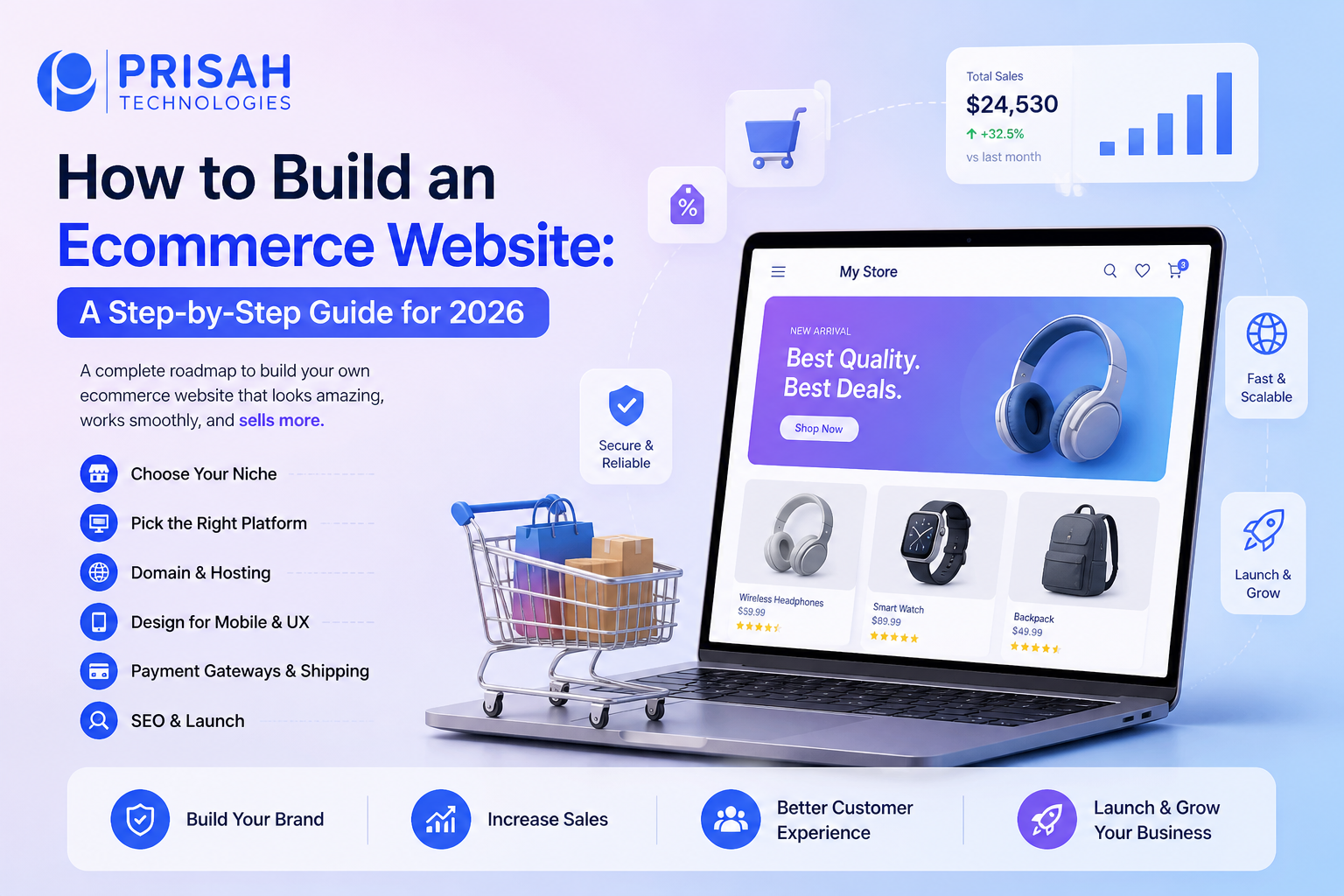
Building a successful online store requires more than just listing products; it requires a strategic blend of user experience, security, and technical performance.
Below is a comprehensive guide to building your e-commerce platform, along with the SEO assets you need to rank effectively.
How to Build an Ecommerce Website: A Step-by-Step Guide for 2026
In today’s digital-first economy, your website is your most important salesperson. Whether you are a small boutique or a large-scale distributor, follow these steps to launch a high-converting online store.
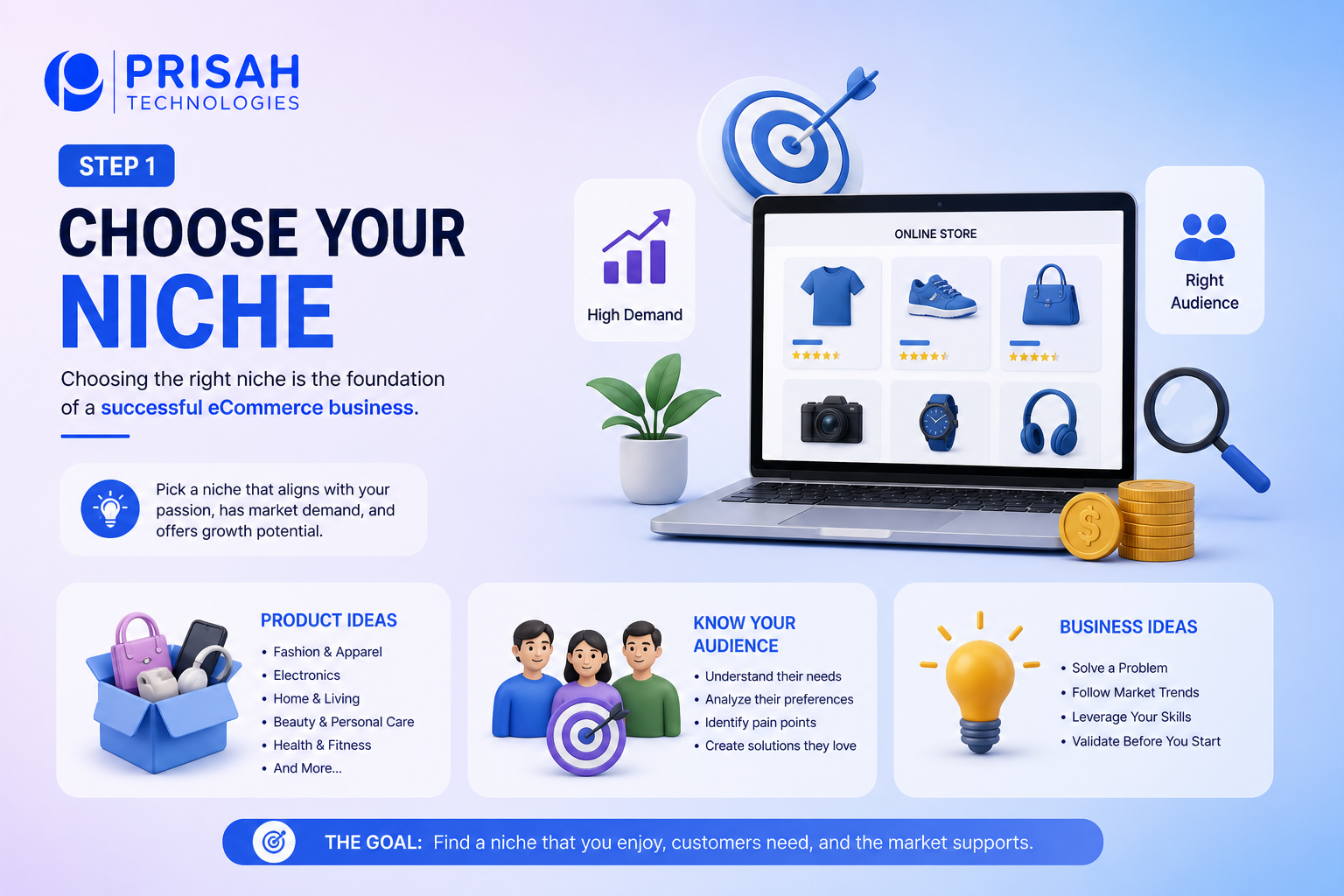
Step 1: Choose Your Niche and Business Model
Before writing a single line of code, define what you are selling and to whom. Are you focusing on B2C (Business to Consumer) or B2B? Identifying your niche helps in selecting the right features and design language for your site.
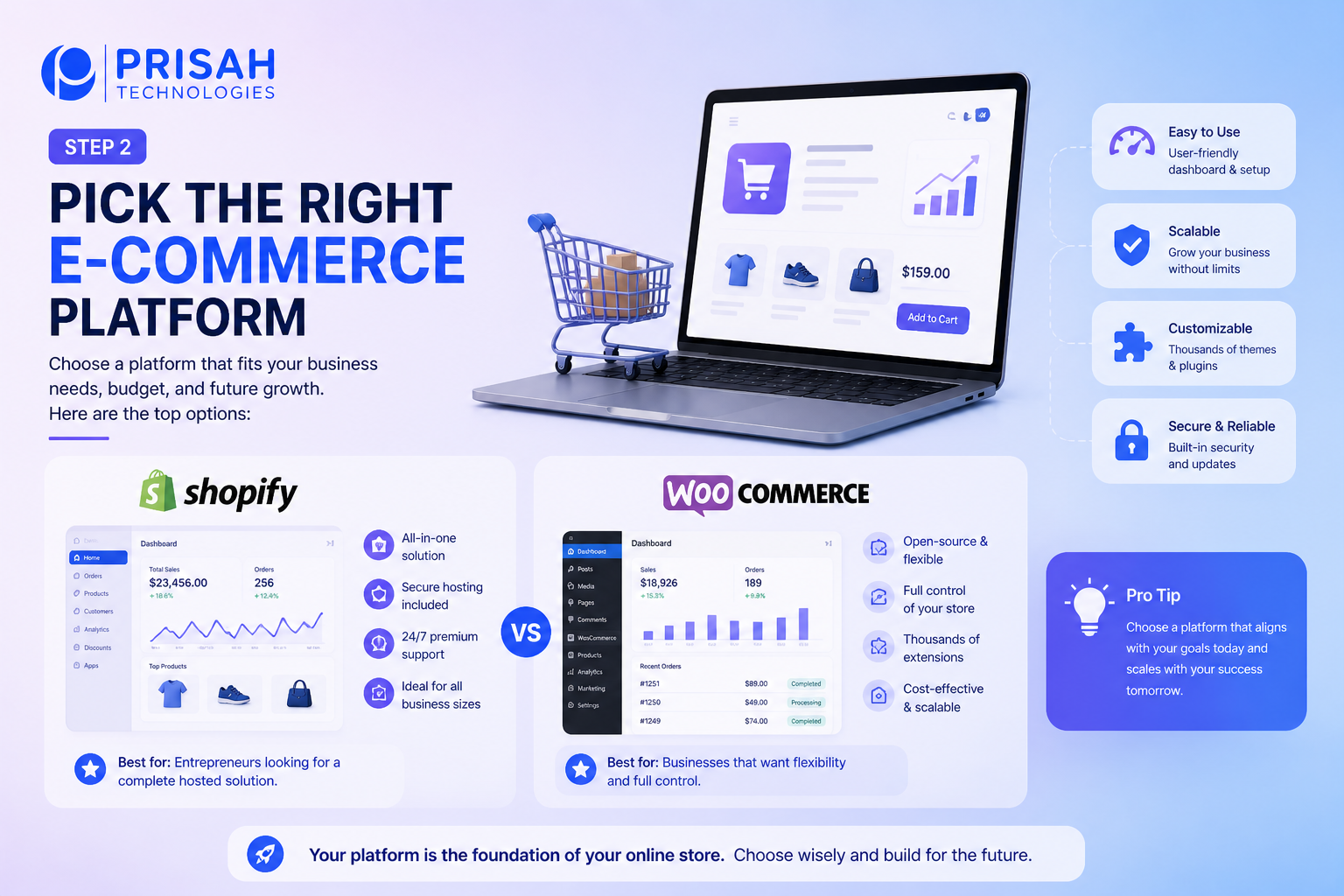
Step 2: Pick the Right E-commerce Platform
Selecting the right foundation is critical. You have three main paths:
SaaS (Software as a Service): Platforms like Shopify or BigCommerce are great for quick launches.
Open Source: WordPress with WooCommerce offers maximum flexibility and ownership.
Custom Development: For unique business logic, custom-built solutions (using HTML, CSS, JS, or frameworks) provide the best scalability.
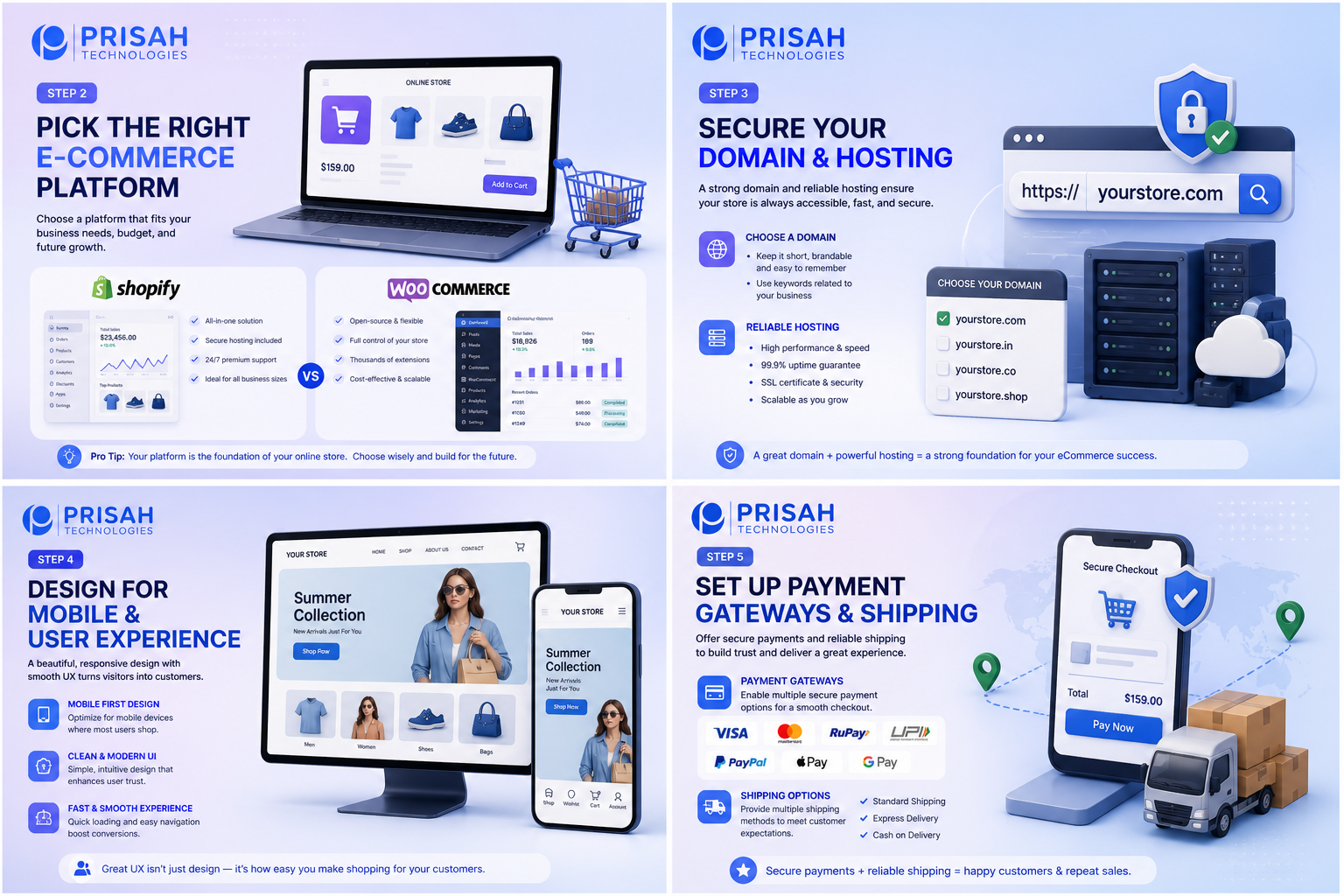
Step 3: Secure Your Domain and Hosting
Your domain name should be your brand name—short, memorable, and easy to spell. Ensure you have a reliable hosting provider and a mandatory SSL Certificate to protect customer data and build trust.
Step 4: Design for Mobile and User Experience (UX)
In 2026, mobile-first design is the standard. Your site must be responsive, ensuring it looks and functions perfectly on smartphones. Focus on:
Clean Navigation: Users should find products in 3 clicks or less.
High-Quality Visuals: Use optimized images that don’t slow down your site.
Fast Loading Times: Speed is a major ranking factor for SEO.
Step 5: Set Up Payment Gateways and Shipping
Integration with trusted payment providers (like Stripe, PayPal, or Razorpay) is essential. Clearly define your shipping zones, rates, and return policies to avoid cart abandonment.
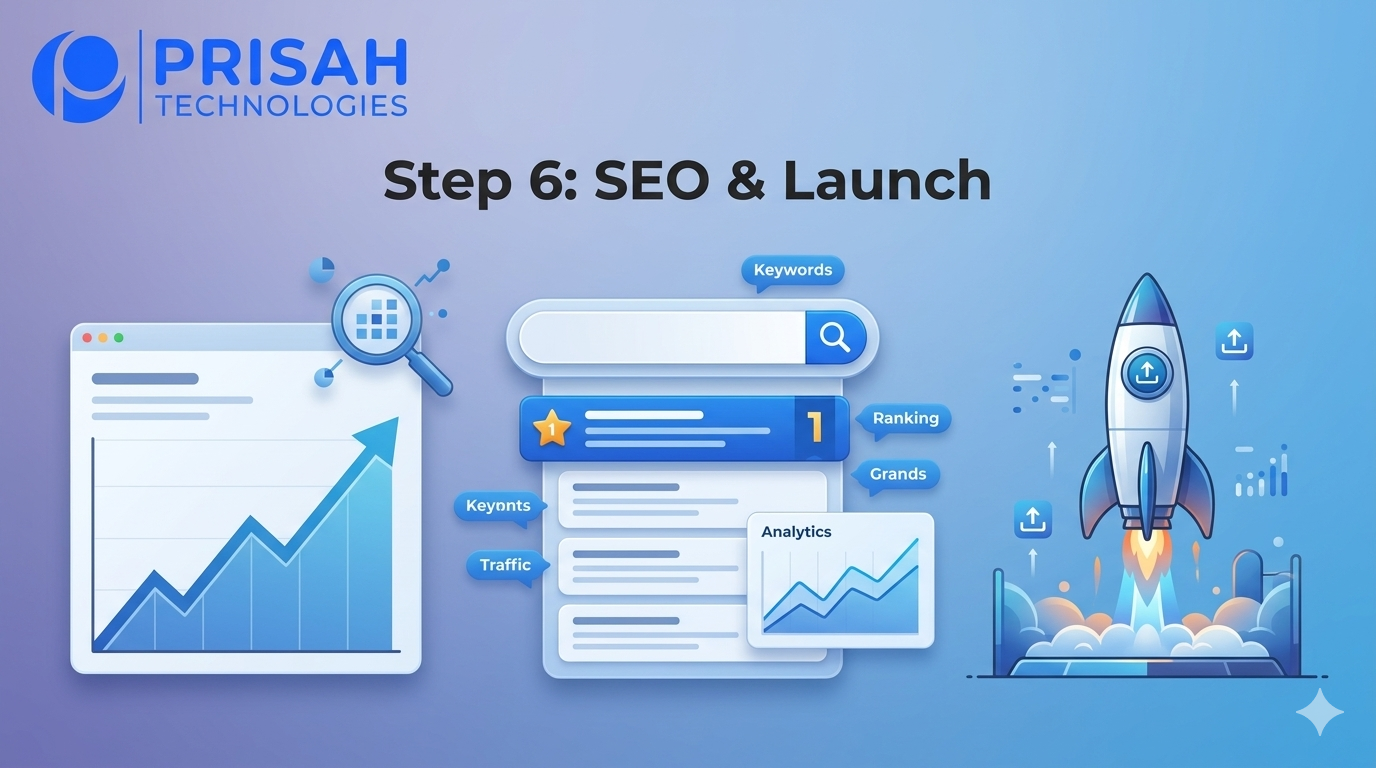
Step 6: SEO and Launch
Optimize your product descriptions with relevant keywords, set up your Google Business Profile, and ensure your technical SEO is airtight.
Professional Tip: Building a secure, scalable store can be complex. At Prisah Technologies, we specialize in providing end-to-end IT services and E-commerce Website Development to help businesses dominate their local and global markets.
Follow Prisah Technology Today:
Services By Prisah Technologies Related to This Blog